Sunday, October 5, 2014

NIGERIA, ISLAMISM AND THE ISLAMIC DEVELOPMENT BANK

NIGERIA, ISLAMISM AND THE ISLAMIC DEVELOPMENT BANK
by Eghes Eyieyien
In some ways I truly admire Mallam Sanusi Lamido Sanusi, the Governor of the Central Bank of Nigeria. He is not just a very intelligent, suave, populist orator; he is also a great strategist. While he still continues to be irritatingly loquacious and he stubbornly experiments with his inane ideas and policies which are destroying the capital market, the banking industry and the economy, one cannot but admire his single-minded commitment to foist his Malaysia-style Islamic Banking on Nigerians despite superior and rational arguments that have been canvassed by a number of informed people that a uniform and religion-neutral Non-Interest Financial Institutions (NIFI) Framework should be issued by the Central Bank of Nigeria to replace its extant NIFI Guideline. But that is not even the issue of our discourse here.

Not many might have noticed that Mallam Sanusi Lamido Sanusi has since taken a back seat with regard to the promotion and advocacy of Islamic Banking. His advisers and fellow Islamists must have told him he would help their Jihadist cause better if he worked from the shadows. Now, my friend and former colleague at the Nigeria Deposit Insurance Corporation (NDIC) where we were both Senior Managers in 1996, Dr. Yerima Ngama, the Honourable Minister of State for Finance, has stepped forward as the new face of Islamic Finance advocacy and promotion in Nigeria. He has even been designated the Islamic Development Bank "(IsDB) Governor - Nigeria" And the Vice President, His Excellency, Arc. Namadi Sambo, has found himself being pushed forward by his subordinates to give "Presidential endorsement" to the Finance Agenda of Political Islam. Kudos to SLS!!

Sanusi must be feeling triumphant that Islamic Finance appears to be on the march in Nigeria. He has succeeded in making all the financial regulatory bodies in Nigeria to sanction Islamic Finance in one way or the other. The Securities and Exchange Commission, the Nigeria Deposit Insurance Corporation, and more recently, the National Pension Commission have all made some adjustments to their regulatory guidelines to accommodate "Shariah-compliant" financial products and services.

The Transcorp Hilton Hotel, Abuja, played host to The IsDB- Nigeria Business Forum which took place from 15th to 16th March, 2012. The Islamic Development Bank and its partners pulled out all the stops to put up a display designed to impress its foot-print on the African Jewel south of the Sahara. It's delegation included its Group President, Dr. Ahmad Mohamed Ali Al-Madani, Dr. Birama B. Sidibe (Vice President, Operations), Dr. Abdel Rahman Taha (CEO, Islamic Corp. for the Insurance of Investment & Export Credit), Khaled Al-Aboodi (CEO, Islamic Corporation for the Development of the Private Sector), and Dr. Waleed Al-Wohaib (CEO International Islamic Trade Finance Corporation). The "Country Hosts" were said to be the Coordinating Minister for the Economy & Hon. Minister for Finance, Dr. Mrs Ngozi Okonjo-Iweala, Hon. Minister of State for Finance & IsDB Governor - Nigeria, Dr. Yerima Lawan Ngama, and Executive Secretary of Nigeria Investment Promotion Council (NIPC) –Eng. Mustafa Bello. Chicason Group, Jaiz Bank and Bank of Industry were the "Corporate sponsors" of the event. Sadly, the "Distinguished Special Guest of Honour and Patron of the Business Forum", President Goodluck Ebele Jonathan, did not grace the occasion but was ably represented by Arc. Namadi Sambo.

Just last week, during the special meeting of the African Governors Forum on the Special Programme for the Development of Africa (SPDA) held in Khartoum, Sudan, the Nigerian Vice President announced while delivering his keynote address that the Islamic Development Bank (IDB) has set aside about $2billion dollars (about N310 billion) in support of Nigeria's developmental programmes which is to span three years (2012-2014). By the way, the Opening Ceremony of the IDB programme was "graced" by Sudan's President Omar al-Bashir who is wanted by the International Criminal Court on war crimes charges.

In February, the Federal Government sought approval from the National Assembly for its intention to borrow $7.9 billion from the World Bank, African Development Bank, Islamic Development Bank, EXIM Bank of China and Indian lines of credit. The President indicated that the funds would be used to cover pipeline projects in the 2012-2014 External Borrowing Plan. Under the plan, government will borrow $2.64 billion annually. Even before the approval of the National Assembly, Dr. Yerima Ngama disclosed that Nigeria has already applied for US$670million "interest-free loan" from the Islamic Development Bank. This "interest-free loan", however attracts a charge which the IDB's Disbursement Manual calls "a modest service fee, not exceeding 2.5%, to recover part of the administrative costs incurred in project identification, appraisal and supervision". However, if it is an OCR (Ordinary Capital Resources) Loan, the service charge is 4%. It is not clear yet whether Nigeria's Loan request is considered an OCR Loan and what the proposed Profit and Loss Sharing arrangement is between the Federal Government of Nigeria and the Islamic Development Bank on the "interest-free loan" being sought.

If you are familiar with Nigeria's history with foreign debts, you must have been alarmed as I was. As at 4th April, 2012, our Foreign Exchange Reserves were a mere US$35,822,362,444.10 while our States and Federal Governments' External Debt Stock as at 31st December, 2011, totalled US$5,666,579,900 Our Domestic Debts stood at N5,622,843,712,000that is about US$36,276,411,045 using a conservative exchange rate of US$1/N155. The Debt Sustainability argument that our GDP can accommodate more debts is hollow. The reality is that our cashflow as a nation cannot sustain more debts! Nigerians should rise up to say NO to the government's plans to borrow about US$7Billion for the pipelines project. However, we should even be more alarmed that, under the guise of finance, the Political Islamists in the Federal Government want to surreptitiously lure Nigeria and Nigerians into indebtedness to the religious organisation, the Islamic Development Bank.

Some would argue that the Islamic Development Bank is merely about finance and that "money has no religion". But is the IDB really all just about finance? The IDB website (http://www.isdb.org) says much which is enlightening:
Establishment

The Islamic Development Bank is an international financial institution established in pursuance of the Declaration of Intent issued by the Conference of Finance Ministers of Muslim Countries held in Jeddah in Dhul Q'adah 1393H, corresponding to December 1973. The Inaugural Meeting of the Board of Governors took place in Rajab 1395H, corresponding to July 1975, and the Bank was formally opened on 15 Shawwal 1395H corresponding to 20 October 1975.
Purpose

The purpose of the Bank is to foster the economic development and social progress of member countries and Muslim communities individually as well as jointly in accordance with the principles of Shari'ah i.e., Islamic Law.

Functions:
The functions of the Bank are to participate in equity capital and grant loans for productive projects and enterprises besides providing financial assistance to member countries in other forms for economic and social development. The Bank is also required to establish and operate special funds for specific purposes including a fund for assistance to Muslim communities in non-member countries, in addition to setting up trust funds. The Bank is authorized to accept deposits and to mobilize financial resources through Shari'ah compatible modes. It is also charged with the responsibility of assisting in the promotion of foreign trade especially in capital goods, among member countries; providing technical assistance to member countries; and extending training facilities for personnel engaged in development activities in Muslim countries to conform to the Shari'ah.

Membership
The present membership of the Bank consists of 56 countries. The basic condition for membership is that the prospective member country should be a member of the Organisation of Islamic Cooperation (OIC), pay its contribution to the capital of the Bank and be willing to accept such terms and conditions as may be decided upon by the IDB Board of Governors.

In its 1440AH (2019 AD) Vision Document it clearly states: "As an Islamic development bank, IDB needs to be driven by a vision of development that is inspired by Islam. The Islamic vision of development has its roots in Religion (Deen), and is heavily governed by Divine Law (Shari'ah), ethics and morality (Akhlaq). It is predicated upon the premise that human beings are created by God to fulfil a specific mission." IDB's vision states: "By the year 1440 Hijrah IDB shall have become a world-class development bank, inspired by Islamic principles, that has helped significantly transform the landscape of comprehensive human development in the Muslim world and helped restore its dignity."

The Islamic Development Bank's Disbursement Manual states as follows:
"The Islamic Development Bank operates according to the Shari'ah principles. Shari'ah is the set of rules derived from the Holy Quran, the authentic traditions (Sunnah) of the Prophet (peace be upon him) and the scholarly opinions (Ijtehad) which are based on the Holy Quran and the Sunnah. The principles of Shariah that govern Islamic banking are the following:-
- prohibition of interest (riba) in all financial transactions, such as: riba in debts,
riba in sales, including forward currency deals and futures exchanges.
- Participation in profit and loss sharing, since return is not guaranteed in an
Islamic transaction."

The Disbursement Manuel also states: "IDB does not borrow from the market and its operations are sustained by share-holders capital, retained earnings and funds generated internally through its foreign trade and project financing operations. The IDB has no non-regional members. The IDB is an institution established by the Ummah, for the Ummah and operated and managed by the Ummah. The IDB finances trade and development projects both for the public and private sectors, finances large and medium sized projects and small enterprises in the member countries."

There is no doubt that the Islamic Development Bank is a religious financial institution dedicated to the promotion of Islam and Shariah-compliant finance for the benefit of Muslims. It is ridiculous when apologists say otherwise. If Nigeria were an Islamic country there would be no problem. But Nigeria is not an Islamic country and it is not part of the "Muslim world". While there are Muslim Nigerians, Nigerians are a multi-religious people and the Nigerian state is constitutionally secular. So it cannot be OK for Nigeria to be a member of IDB or to be seeking loans from it. Nigeria has no business with IDB.

The erosion of Nigeria's secularity has been insidious over the years such that many Nigerians do not even notice it. The real issue here is POLITICAL ISLAM or ISLAMISM: the effort to impose Islam and the Principles of Shariah in the political, social and economic space of a country. For Islamists, religion should not be private to the practitioner. The state and its organs must conform to Shariah Law. Some do not even understand Islamism so naively think there is no danger when our state institutions are allowed to promote Islam against other religions in the country.

Our Naira notes have Hausa words written not in our "abidi" anglicised text, in which the language is written and taught in schools, but with Arabic script. The insignia of the Nigerian Army similarly has Arabic writings. It was Gen. Ibrahim Babangida who arrogantly went and enlisted Nigeria as a member of the Organisation of Islamic Countries without the knowledge of his deputy at the time, Commodore Ebitu Ukiwe. Commodore Ukiwe lost his office unceremoniously when he told journalists that he was unaware of Nigeria's membership as the matter was never discussed how much more approved by the Supreme Military Council. Nigeria became a member of the Islamic Development Bank in 2005 under the administration of former President Olusegun Obasanjo. One cannot help but wonder who Obasanjo was trying to impress by this unfortunate move. I do not recall the National Assembly discussing the issue and giving its approval for the appropriation of the country's investment in IDB's Share Capital. Nigeria presently holds 7.69% of the bank's Paid-up Share Capital of 17.7826Billion Islamic Dinar or approximately US$ 27.32Billion as at 25th November, 2011, making it the fourth largest shareholding after Saudi Arabia's 23.61%, Libya's 9.47% and Iran's 8.28% shareholdings.
Shariah was introduced in some northern states contrary to the Nigerian Constitution. Sanusi Lamido Sanusi introduced Malaysia-style Islamic Banking contrary to the Nigerian Constitution and the Banks and Other Financial Institutions Act. Sanusi also made Nigeria a founding member of the International Islamic Liquidity Management Corporation and invested US$5million in its share capital. Sanusi had also been advocating that Nigeria should issue "Sovereign Sukkuk Islamic Bonds". And now the Federal Government is seeking loans from the Islamic Development Bank when we are not an Islamic country.

No doubt, it is might be deemed to be civil and politically correct to close one's eyes to these developments so as not to be seen as "intolerant" and not be accused of being "Islamophobic". Some non-Muslim readers may even reiterate the new mantra of "financial inclusion" as the reason why Islamic Banking should not only be accommodated in the Nigerian financial system but even promoted with state funds.

Religion is a very important part of the discussion because of the unfortunate role it plays in Nigeria's politics. It is actually the main tool being exploited by many politicians for ascendancy to office both in the north and in the south. Why was Gen. Ibrahim Babangida able to unilaterally make Nigeria a member of the Organisation of Islamic Countries? Possibly because of the fallacy that Muslims are in the majority in Nigeria? Why was a Governor able to single-handedly breach the Constitution of the Federal Republic of Nigeria which he swore to uphold and declared Shariah in Zamfara State and even the otherwise bold President Olusegun Obasanjo was intimidated not to challenge the act in the Supreme Court? Because Zamfara State is seen as a "Muslim State" since the majority of its indigenes is Muslim. Even the highly respected Muslim former Chief Justice of the Federation, Late Justice Mohammed Bello, declared that the introduction of Shariah was a contravention of the Nigerian Constitution. But today, some other northern states are Shariah states and the rights of other non-Muslim Nigerians are daily infringed there. Boko Haram has taken the cause of Islamism to a new level: it is carrying on a Jihad bombing, maiming and killing innocent people in the futile bid to make Nigeria an Islamic state.

Sanusi Lamido Sanusi and his fellow proponents of Malaysia-style Islamic Banking in Nigeria and the entrenchment of the Islamic Development Bank's Islamist Agenda in our nation are actually on a "Financial Jihad". It is the continuation of the Islamist Agenda of Sir Ahmadu Bello, the Sardauna of Sokoto and Premier of old Northern Region, who famously said he wants to dip the Quran in the Atlantic Ocean and make Nigeria the estate of his Great Grand-Father, Usman Dan Fodio. The objective is to make out Nigeria as an Islamic country and ensure the imprint of Islam and Shariah Principles in the Nigerian government, our institutions and the Nigerian financial system. Mallam Sanusi Lamido Sanusi is one person that has perfected the practice of Taqiyya: Sacred Deception - the Islamic doctrine of deceit to defend and promote Islam; deception which advances Islam which is not regarded as sin. He has deployed the doctrine very well so far in his Jihadist activities. But not everyone is deceived.

I am against undermining the nation's constitution and our secularity to advance Islam or Christianity for that matter. We must defend Nigeria's secularity. We cannot and must not continue to condone the deliberate actions of those whose agenda is to advance Islam and portray us as an Islamic nation. No religion should be given preference by the government in whatever way. If Nigeria must borrow, there are numerous non-religious lending institutions around the world which do not have a religious agenda like the Islamic Development Bank. If IDB is just about finance as some think, why does its "Purpose" include to "foster the economic development and social progress of member countries and Muslim communities individually as well as jointly in accordance with the principles of Shari'ah i.e., Islamic Law."? Do the World Bank, Africa Development Bank, International Monetary Fund etc. have such an agenda?

The Islamic Development Bank is about Political Islam and the funding of projects is the bait to draw in poor nations looking for "cheap money". Nigeria does not need Islamic Development Bank's loans, interest-free or not, and its other greek gifts. We can do without Islamism's financial agenda.
GOD BLESS NIGERIA!

Eghes Eyieyien
6th April, 2012
http://eghes.blogspot.com/


Thursday, August 14, 2014

THE 2014 NATIONAL CONFERENCE 'DRAFT CONSTITUTION'

By James Pam
Delegates to the 2014 National Conference resumed plenary on Monday 11th August, 2014 for the purpose of adopting their compiled recommendations and resolutions. They had hoped that they would simply read through one neat document, cross the ‘t’s and dot the ‘i’s to ensure that the final compendium to be presented to Mr. President accurately captures their decisions. However, what they were confronted with was several documents which have generated such a controversy among them that the entire could be jettisoned after all.
Three documents were presented to delegates upon resumption. The first document is the Conference Report proper, which is in two volumes; Vol. 1 has about 500 pages and Vol. 2 has about 900 pages. The second document is a ‘matrix’, in the words of the Conference Secretary, Mrs. Gloria Azinge. As to be expected in a matrix, it has been prepared in three columns; the first column contains the current Nigerian 1999 Constitution provisions that affected by Conference decisions; the second column contains the constitutional amendments recommended by the Conference delegates, while the third and last column contains a fusion of conference recommendations and the 1999 Constitution.
In the absence of Conference Chairman and his deputy, Justice Idris Kutigi and Prof. Bolaji Akinyemi, respectively, Mrs. Azinge explained further by saying that in order to make the work of delegates easier, the Secretariat had gone ahead, extracted the third column of the second document, which is the fusion of the existing constitution and the amendments proposed by the delegates, and produced a another document titled, ‘Draft Constitution’. It is this third document and the liberty taken by the Conference Secretariat to produce it that is causing the hullabaloo and drawing flaks from some delegates.
Azinge was not finished yet. She added that the Secretariat had also produced the fourth document, a draft Bill, which Mr. President will use to introduce the amendments and alterations to the National Assembly, which could eventually lead to the Fourth Amendment to the Nigerian Constitution.
The ‘Draft Constitution’ immediately drew the ire of some delegates, especially those from some parts of defunct Northern Region. On the NTA Good Morning program today, 13th August, 2014, Prof. Auwalu Yadudu and Malan Tanko Yakassai told anchor persons, Kingsley Osadolor and Claire Adelabu, and all Nigerians that: (1) The Conference does not have Mr. President’s mandate to produce a Draft Constitution: (2) Such a Draft Constitution has no legal basis because the National Conference is not tantamount to a Constitutional Conference: (3) Delegates would be overstepping their bounds if they prepared a Draft Constitution: (4) The 1999 Constitution provides that a new Constitution can only be introduced to the floor of the National Assembly by the legislators themselves and nobody else.
Newspapers in the last 24 hours have reported that a communiqué was read in Abuja on Tuesday, 12 August, 2014 by the leader of some northern Conference delegates, former Inspector General of Police, Ibrahim Coomassie. A picture embedded in one of the newspaper reports has Coomassie flanked by former member of the House of Representatives, Muhammed Kumalia, former Federal Capital Territory Minister, Gen. Jerry Useni, one-time Senate President, Prof. Iyorchia Ayu, and others. Coomassie said that the Draft Constitution was meant to legitimize President Goodluck Jonathan’s third term agenda and that they objected to it. He said drafting a new Constitution is ultra vires the functions and mandate of the National Conference and that the group they were representing was dissociating itself from the Draft Constitution.
The objections of these core northern delegates and their arguments are untenable. At the inauguration of the National Conference on the 17th May, 2014, Mr. President said, “Let me at this point thank the National Assembly for introducing the provision for a referendum in the proposed amendment of the Constitution. This should be relevant for this Conference if at the end of the deliberations, the need for a referendum arises. I therefore urge the National Assembly and the State Houses of Assembly to speed up the Constitutional amendment process especially with regard to the subject of referendum.” The President was more visionary than some people care to think. From inception, he envisioned the situation before us today and was able to foresee its solution. Our elected legislators in the NASS should play their part in this process honorably by making legal provision for a referendum to take place and all will be well. This is what Mr. President and other Nigerians ask of them.
I was privy to email communications between some delegates in which they made reference to a   new partnership that the National Conference has spurned between the three southern geo-political Zones and the North-Central Zone. For lack of a better name, one of the communications christened it the “Greater South”. The implication of this new alliance is that four geo-political zones identified common progressive grounds during the Conference debates, while two preferred to maintain the status quo. Two-thirds majority of delegates are not just comfortable, but are very happy with the Conference Draft Constitution. Should the one-third conservatives have their way over the progressive and pragmatic majority? I dare say, no.
What was the expectation of the so-called “northern delegates” (minus those from the NC Zone, except for Gen. Jerry Useni and Prof. Iyorchia Ayu, who are both in their geriatric cycle of redundancy) when they were debating and reaching decision on constitution matters for three months? Didn’t they realize that their decisions were meant to be used to amend our Constitution? They should be happy that their work coming into fruition even faster than they had thought and that their labor may not be in vain after all.  
Again, in his inauguration speech on 17th may, 2014, Mr. President said, “In inaugurating this National Conference today, we are not unmindful of the argument of those who say that we do not need such a Conference since we already have an elected Parliament and an elected Government in place. As cogent as that argument may sound, I have chosen to act on the sincere conviction that in the truly democratic nation we are striving to build, we must never ignore the loudly expressed views of the majority of ordinary Nigerians.” The views of majority of Nigerians have been loudly expressed in the Conference ‘Draft Constitution’ through their delegates to the National Conference and must not be ignored.
In the same inauguration speech, which was commented upon by all 492 delegates, the President said, “The phrase in the preamble that says ‘We, the people’, has been variously criticized as being misleading because. According to the critics, the Constitution was not written by the people. There are also those who believe that the Constitution is not our problem but the political will to faithfully implement it for the peace and progress of Nigeria. While opinions on the matter can be as diverse as rain showers, I believe that irrespective of our personal views on the issue, no one can deny the fact that every Constitution is a living document that needs to be revised and improved upon from time to time. The United States, which is the model democracy in the eyes of many, has amended its Constitution 27 times since it was first adopted in 1787.” Mr. President, therefore, expected delegates to present to him a revised Nigerian Constitution at the end of their deliberations, provided they recommended enough amendments to the existing one to warrant the drafting of a new one incorporating their recommendations.
I seize this opportunity to urge all well-meaning delegates to defend their work, which is now embodied in the Conference ‘Draft Constitution’ and oppose their colleagues who might want to kill it. If they don’t, they would be doing the President and all Nigerians a great disservice. I would go as far as describing the production of a Draft Constitution for Nigeria by the  2014 National Conference as its greatest achievement.
James Pam, 13 August, 2014


Saturday, August 9, 2014

FAILURES OF 2014 THE NATIONAL CONFERENCE

                           Picture: A cross-section of delegates at the 2014 National Conference

President Jonathan’s National Conference has finally ended plenary sitting. What remains is the technicality of appending signatures to the consolidated Conference Report, which event is scheduled for 11th August, 2014. Thereafter, the Report will be presented to the conference convener.  
When I told a friend that I was writing an article on the failures of the Jonathan National Conference, he asked if my post-mortem examination was not too early. I replied him that I wasn't doing a post- mortem job but a listing of what the Conference did not do. Readers should please appreciate the difference as they read. Those who will thoroughly analyze the Conference may find this article a good starting point as they review the Conference agenda to assess if what was supposed to be done was done. It is also my hope that Mr. President would be better informed by this early commentary as he considers the final Report.
This article will attempt to read in-between the events that transpired while the Conference lasted. Identified gaps and newly created issues will be highlighted. The actual decisions reached by conferees are not the main subject of discourse here but what was omitted or created. Inductive reasoning shall be employed.
1.      CONVENER’S OBSCURE INTENTIONS: The true intentions of the convener of the Conference, President Goodluck Ebele Jonathan, GCFR, have remained obscure right from the conception of the Conference up to the current stage of development. He who was initially totally opposed to the idea of holding any such conference surprised Nigerians when he announced that he would convene one within weeks. The agitators of a Sovereign National Conference were overjoyed while the skeptics and antagonists concluded that Mr. President had a hidden agenda up his sleeves. How honest was the convener when he refused to propose the conference agenda but asked the Okorounmu Committee to draw up one? Instead of an agenda containing about a dozen key contentious issues, we ended up with a 38-point unwieldy agenda with two-thirds of the items better left for MDAs to fashion out. The released conference modalities and the modalities for the emergence of delegates were so skewed to enable Mr. President to remote-control the Conference that it further heightened the speculation that the President had a sinister motive embedded in his Conference plans. But what could these sinister motives be? Till date nothing is clear or certain. The nearest we have come to understanding his game plan is an inkling that he might be interested in ushering in a new constitution for the country based on the conference decisions. This assertion has been informed by two events. The first is his pronouncement that Conference decisions would be presented to him in the form of a new draft constitution (which now looks unlikely). The second is the Deputy Senate President’s attempt to surreptitiously smuggle a clause hitherto not discussed into the final report of the Senate Committee on Constitutional Review which he chaired.  The aim of the un-debated clause was to grant the President of Nigeria the constitutional right to introduce a new Constitution for the country by way of an Executive Bill to the Legislature. Was Senator Ekweremadu acting the script of Mr. President?
2.      MARGINALISATION OF MANY NIGERIANS IN CONFERENCE COMPOSITION: The modalities for the emergence of delegates excluded 80% of stakeholders in the Nigerian project. Those who had been clamoring for a National Conference for about twenty years were not recognized. Mr. President personally nominated the following delegates, 37 Elder Statesmen, 6 Youths, 6 Judicial Officers/Federal Government and another 20 delegates; thus giving Mr. President the opportunity to nominate a total of 69 out of 492 delegates. State Governors and the FCT Minister nominated another 109 delegates according to Nigeria’s Senatorial Districts. This means that a total of 178 delegates, about 40% of all the National Conference delegates, were nominated directly by Mr. President, the 36 State Governors and the FCT Minister. Mr. President and State Governors heavily influenced the nomination of delegates from among Traditional Rulers, Retired Military & Security Personnel, Retired Civil Servants and Political Parties. The combined effect of the foregoing is that Governments directly or indirectly nominated about 80% of delegates who attended the Conference. Ethnic nationalities who were in the forefront of the agitations for a conference were allocated 90 slots, or 15 delegates for each of our 6 geo-political zones. These 90 delegates were to be selected/nominated/elected somehow by the ‘stakeholders’. We all know now that State Governors hijacked the selection/nomination/election process and simply hand-picked their cronies and forwarded 90 names to the SGF’s office.   
3.      DOMINANCE OF THE PRESIDENT’S MEN: Though the Senator Pius Anyim-released conference guidelines specified that conference decisions shall be reached by consensus (100% agreement), delegates amended this to 70%, which was not adhered to even once as all final conference decisions were arrived by voice vote, which was not provided for at all in the conference modalities. Is a majority voice vote tantamount to a 70%  or more consensus? Why did delegates only object to the voice vote procedure when it came to the Derivation Principle decision? It is no wonder that newspapers are now saying some delegates are planning to sabotage or scuttle the final Conference Report signing ceremony on 11 August, 2014. Was there consensus on all the issues decided upon? It doesn’t appear there was.
4.      TRAUNCY BY DELEGATES: Many delegates played the truant school child during the Conference. Absenteeism among them was rampant. We daily observed the empty seats with bold name tags without their supposed occupants. Many final decisions were taken on Committee Reports when less than 70% of delegates were at plenary sessions. Should such decisions bind the millions of Nigerian who were under-represented by their un-elected so-called delegates?
5.      COMPREHENSION OF ISSUES BY DELEGATES: Many delegates did not comprehend the issues at stake. This could be deciphered from many of them who were interviewed by media house after debates. Many displayed their ignorance and incompetence. The last decision to be taken at the Conference to the effect that the Federal Government should set up a Technical Committee to handle the highly emotive 13% Derivation Principle proves this assertion. Among the 492 delegates were men and women from all professional callings. Why did the conference not deem it fit to constitute such a Technical Committee and make the needed recommendation for amendment?
6.      INABILITY TO SOLVE PRESSING NATIONAL ISSUES: One monumental failure of the Conference was the abdication of its responsibility to decide on the Derivation Principle. The conference secretariat short-changed delegates by deciding not to allow a debate on the issue. In short, what is going to be adopted as a final conference decision is not a decision at all but an abdication. Nigerians were shocked to see watch the Conference leadership impose a no-go area for conferees. The Derivation Principle effectively became a no-go area.
7.      DELEGATES’ CONTRIBUTIONS: In terms of individual contribution to the conference by delegates, we estimate that less than 50% of delegates contributed meaningfully towards the final conference resolutions. The inference from this is that it is likely that 492 was an unwieldy number of delegates for such a conference. It is also likely that up to 50% of the government-selected delegates were undeserving of the privilege to be there. This is another dimension of corruption.  Delegates for national assignments should never emerge again in the manner the National Conference delegates emerged.
8.      NATIONALISM AND NATIONAL COHESION: Many delegates claim that the national interest was the overriding logic in their deliberation, but we find it difficult to agree. Every issue was viewed by delegates either through religious prisms or through regional trick books or through well-polished and sophisticated ethnic binoculars. May be the only exception to this was the recommendation for the creation additional 19 States in the country, which was a really nationalist decision, although the North-West and North-East delegates opposed it. Recollect that the Conference proper was preceded by a religious protest to the Convener led by the Sultan regarding the ‘lopsidedness’ in the faiths of delegates. The last impossible decision on Derivation was aborted because the so-called ‘North’ insisted that the newly recommended 5% Fund be restricted the NE, NW and NC zones. Nigeria’s greatest stumbling blocks remain ethnicity, geography and religion. Shall we ever change and become the nationalists that we always claim to be? The Conference failed to change us.
9.      RE-STRUCTURING: The failure of the Conference to achieve this most articulated progressive issue is another big failure of the just-concluded conference.  The South East, South South, South West and North Central geo-political zones arrived the Abuja venue of the Conference minds made up to demand the regionalization of the country into 6 Regions. Chief Femi Fani-Kayode recently published an article titled, “Give me Oduduwa Region or Nothing”. A South Eastern socio-political group has asked delegates from their zone not to return home if they do not secure a recommendation for the creation of a South Eastern Regional government. Everyone thought Professor Jerry Gana would finally deliver a Middle Belt Regional Government to the eternally oppressed Christians and minority tribes of the North Central zone. Alas, the much-touted return to Regionalism and the Parliamentary system were not to be. What happened? Only the North West and North East objected. Suddenly we heard that the Lagos people said they couldn’t imagine themselves travelling to Ibadan for decisions once again. They have made too much economic progress and Lagos State autonomy is sweet. ‘Northerners’ said the days of the Kaduna mafia are long over. Kaduna is no longer a power base or power symbol. Easterners claim that they have invested too much in real estate, especially hotels, in Abuja to be separated and legally confused by 6 new regional constitutions in the country. It appears that the Middle Belt people are the true losers in the failure to achieve a return to regionalism. Why did two-thirds of conference delegates capitulate on such an important issue? How will the still unresolved “Middle belt Question” be resolved? The actualization of the creation of the Conference-recommended 18 (or is it 19 States, one in the SE plus 18 others) is now the only hope for the liberation of the oppressed Middle Belt minority groups.
10.  LEGAL STATUS OF THE NATIONAL CONFERENCE AND ITS DECISONS: The lack of an enabling legislation for the convocation of the National Conference itself is one of its greatest undoing. The entire National Conference might turn out to be one monumental waste of time and resources if our National Assembly legislators have their way. They say that there is no provision in our Constitution and Statutes books to accommodate the decisions of the just-concluded Conference, and this is true. Similarly, there is no provision for the much-touted referendum either. The un-cooperative legislators said they will throw out the Conference Report whenever it is presented to them for ratification. Why didn’t Mr. President first propose a Bill establishing a National Conference Commission before convening his conference? We recollect that many Nigerians advised him to do just that. Failure to have such legislation in place could have spelt doom for the National Conference even before take-off.    
11.  DEVOLUTION OF POWERS: The Conference failed to devolve some of the vast legislative powers vested in the Federal Government of Nigeria by the 1999 Constitution to its federating units, the States. Many had hoped that the Conference would recommend the transfer of many of the 68 items on the Exclusive Legislative List in the Second Schedule of the Constitution to the Concurrent List which has just 30 items. Prominent constitutional lawyers, including one of the authors of the 1999 Constitution, Prof. Nwabueze, submitted suggestions for achieving this. In my opinion, items such as Census, Commercial and Industrial Policies, Construction, alteration and maintenance of roads, Creation of States, Fishing and Fisheries, Labour, Maritime Shipping and Navigation, Pensions and gratuities, Police and other government securities, Prisons, Public holidays, Quarantine, Railways, Service and execution in a State, The formation, annulment and dissolution of marriages and Trade and Commerce should better be on the Concurrent List. Mind you, the Federal Government will still be able to legislate on them as the name ‘concurrent’ suggests.
12.  SIZE OF GOVERNMENT: Today we have a federal government with 3 tiers of government, about 450 Ministries, Departments and Agencies (MDAs), 36 State governments with their own 3 tiers of government, State MDAs and 774 Local Governments. Recurrent expenditure is 70% on the average across the country. Therefore, only 30% of government expenditure is of capital benefit. The Conference failed to recommend a significant reduction in the colossal size of our administrative apparatchik.
13.  EXCESSES OF STATE GOVERNORS: The overbearing interference of State Governors in Local Government administration should have been checked. Instead, conferees decided to ‘throw out the baby and the bath water’. They recommended the scrapping of the LGs and States’ independent electoral bodies. What is the problem? The problem is that the freedom of the Local Governments has not been guaranteed by our Constitution. The Joint State/Local Government Account should have been recommended for abolishment. Also, the constitutional provision that the development of Local governments shall be determined by States should have been equally recommended for abrogation.  
14.  SOCIAL ILLS: The many social ills bedeviling our society were not addressed. Nothing substantial was recommended towards ending our galloping governmental corruption, the huge and growing economic dichotomy between the ‘haves’ and the ‘have-nots’, run-away unemployment, diversification of our mono-product economy, deteriorating education standards and growing security challenges. Majority of Nigerians are groaning under the yoke of these ills and yet the Conference failed to address them. The Ill-Gotten Gains Act recommended by the Conference will rely on the same corrupt Nigerians to implement it ‘honestly’. If the Federal Character Principle has been violated by officials with impunity in the past, then we should not expect a different attitude toward the recommended Act. In the same vein, the Conference recommendation for the establishment of a Religious Equity Commission will not solve the problem of religious favoritism and discrimination. However, Conference recommendation that all Governments should stop sponsoring religious pilgrimages, which amounts to about N350 Billion waste annually, is highly welcome.  
15.  NOMADIC FULANI/FARMER CLASHES: This issue was on the Okorounmu Presidential Advisory Committee’s suggested conference agenda, yet it was not treated. Nomadic Fulani herdsmen are daily clashing with their host communities all over the country. Fatalities from these clashes are running into tens of thousands. A solution to this problem is urgently needed. We cannot see any other solutions to the problem apart from ending nomad-ism, embarking on moves to settle the nomads on ranches where they will practice integrated sedentary agricultural/animal husbandry. Land resource has become scarce and too valuable for farmers to guarantee our ever increasing numbers of nomads and their cattle eternal and unfettered access to it. Nomadic Fulani people should not remain simply as floating Nigerian ‘citizens’ but must be identified with by their States and Local Governments of origin and ‘indigeneship’ as is the case for all other Nigerians.
16.  FISCAL FEDERALISM: Called by different names – resource control, revenue sharing Derivation Principle and fiscal federalism – it was hoped that this vexing issue would be settled once and for all by the Conference. However, delegates almost went physical on it as they defended their regions or tribes or States at the expense of national interest. In the end, Justice Kutigi, and his team of officials usurped the responsibilities of the delegates by recommending that the issue be left to the Federal Government to address via a Technical Committee. The question one can ask is whether the Technical Committee will not be made up of Nigerians with the same emotions as the delegates. Will Nigeria ever achieve true fiscal federalism?
17.  FREEING THE LAND USE ACT: Failure to recommend the freeing of this piece of legislation from the Constitution is a great shame. Why is the Land Use Act part and parcel of our Constitution anyway? Amending the Act now requires a constitutional amendment. Parliament should be able to amend it just as other statutes. Obtaining title to land and the obnoxious Governor’s Consent to Mortgage as contained in the Land Use Act have stood in the way of providing low-interest long-term funding for land development and the use of land resource as loan collateral. Housing development has been greatly hampered by the inability to quickly secure land title. Our housing deficit today stands at an unbelievable 17 million with no solution in sight. What a shame!

James Pam

01 August, 2014        

Thursday, June 5, 2014

RENAME THE NORTH-CENTRAL AND SOUTH-SOUTH ZONES

A compass rose showing the 4 cardinal directions (written in largest letters), the 4 ordinal directions (written in medium-sized letters) and the 8 intercardinal directions (written in smallest letters).

The naming of the six geo-political zones of the country was not done in compliance with English language syntax. ‘North-Central’ and ‘South-South’ are misnomers. This short write up is intended to highlight the error in the two names and advice the National Conference leadership and delegates to include in their final recommendations new names for the two geo-political zones affected.

The English language has four cardinal directions – North (N), East (E), South (S) and West (W), four intercardinal (or ordinal or intermediate) directions – North-East (NE), North-West (NW), South-East (SE) and South-West (SW). Between the cardinal and intercardinal directions there are eight secondary-intercardinal directions, namely, North-North-East (NNE), East-North-East (ENE), East-South-East (ESE), South-South-East (SSE), South-South-West (SSW), West-South-West (WSW), West-North-West (WNW) and North-North-West (NNW). The diagram attached of a Compass makes these sixteen directions clearer.

As can be easily noticed, ‘North-Central’ and ‘South-South’ directions are conspicuously absent. They are absent because they do not exist, except in Nigerian non-standard English coinage. Although ‘North-Central’ is in use in some parts of the United States of America, that is the only exception to the rule. ‘South-South’ is not used anywhere in the world as directional terminology except in Nigeria.  The term ‘South-South’ is commonly used with reference to any form of cooperation between two or more developing countries which are to be found mainly in the southern hemisphere of our planet. For example, there is South-south economic cooperation between Brazil and Indonesia.

In Standard English, the South-South Zone should be called the DEEP SOUTH Zone while the North-Central Zone should be called CENTRAL Zone or, as the people of the zone prefer to be called, the MIDDLE BELT Zone. I therefore request that delegates from the two affected Zones and/or the leadership of the National Conference propose a motion for the adoption of these changes of names. It is also my sincere wish that the change of names will come along with the restructuring of the country into regional governments currently being canvassed for by the SW, SS, SE and NC geo-political zones.

Written by James Pam.

Friday, May 23, 2014

WHO KILLED TINA AND WHY?

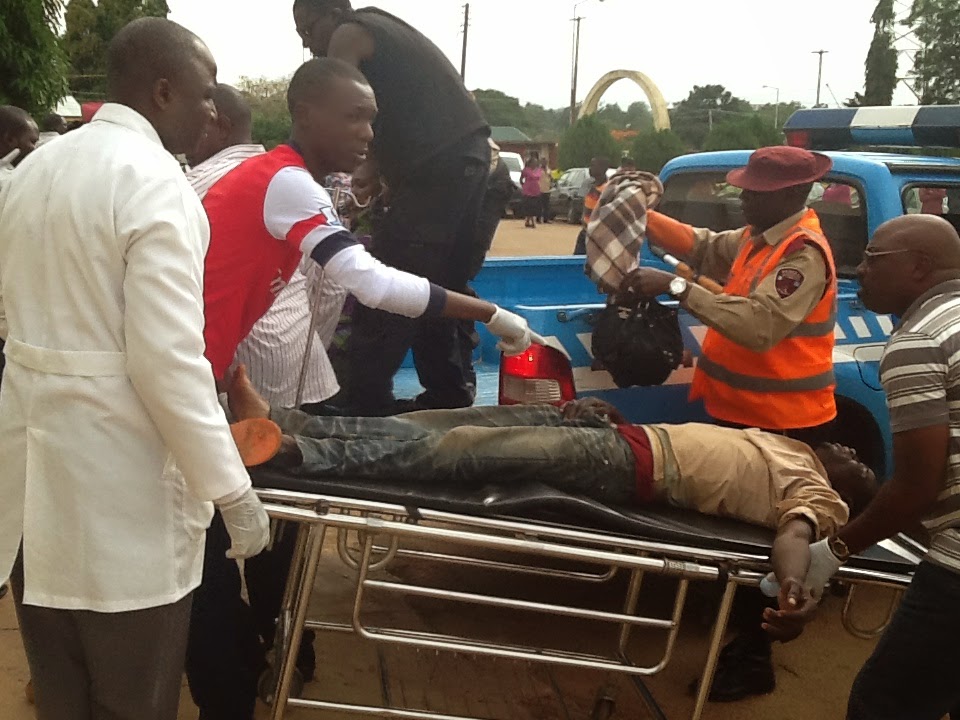
Miss Tina Akpan was a bubbling young teacher until 3:00 pm on May 20, 2014, when she was blasted into eternity by a faceless Boko Haramist's bomb in Jos, Plateau State. We are sad and angry at the senseless attack which consumed 75 innocent Nigerians. Who is Boko Haram and what does he want? Why doesn't he leave me out of it? The Nigerian Government has failed its people in the area of security of life and property. Heavenly Father, please come to our rescue in Jesus' name.

Late Miss Tina Akpan


Friday, May 2, 2014

PRESIDENT JONATHAN, 'BRING BACK OUR GIRLS' CAMPAIGN

PLEASE FOLKS, KEEP THE PRESSURE ON PRESIDENT GOODLUCK JONATHAN UNTIL HE DOES WHAT HE IS SUPPOSED TO DO - BRING BACK OUR GIRLS ALIVE AND WELL.


Sunday, April 20, 2014

TO ALL NATIONAL CONFERENCE DELEGATES: OUR STAND

ASSOCIATION OF MIDDLE BELT INDIGENES
NO. 31, TAFAWA BALEWA STREET, JOS
08156495692, 08037200640, 08036901250, 08036731300
07th March, 2014
TO ALL DELEGATES TO THE NATIONAL CONFERENCE

WISHES AND DEMANDS OF THE PEOPLE OF THE NORTH-CENTRAL ZONE
We have taken time to listen to the yearnings and aspirations of the peoples of the six States that constitute the North-Central Geo-political Zone with regard to the National Conference and have articulated these for the guidance of all delegates. Also, their positions on most of the 38 items recommended for discussion by the Senator Okorounmu-led Presidential Advisory Committee are captured in this advisory. It is our sincere prayer that God will use you to bring about the much-needed improvement to the Nigerian body polity.

MOST PRESSING ISSUE
The issue of greatest concern to the people of the NC Zone is the massive influx of Nigerians from all parts of the country for the purpose of settling here. The NC Zone people do not object to this, but two dangerous phenomena are accompanying this seemingly harmless migration. The first one is the attempt by some of these newcomers to usurp the aboriginal rights of the autochthonous people of the NC Zone by imposing their traditional rulers over them and claiming other constitutional rights that they shouldn’t. The second phenomenon is the rapid loss of title to ancestral land. Without land, a people cease to be a people as history has taught us. In order to check these trends, a political solution is needed. The political and fiscal re-structuring of the country into federating units with reasonable autonomy will make it possible to check these two trends. The adoption of true federalism is what we recommend. This the belief of majority of Nigerians as well.
Nigeria practiced true federalism from Independence on 1st October 1960 until 24 May, 1966 when Gen. J. T. U. Aguiyi-Ironsi abolished the then four Regional Governments via Military Decree No. 5 and removed the appellation of ‘Federal’ from our country’s name. The Decree specified that the four Regional Constitutions had been abrogated and that Nigeria would henceforth be called simply the ‘Republic of Nigeria.’ A Unitary system of Government was thereby put in place. Without re-creating any federating units, the 1979 and 1999 Constitutions returned the appellation of ‘Federal’ to our country’s name. We are therefore operating a false federal system at the moment. Correcting this anomaly through restructuring the country into a true federation will solve the Nigerian and Middle Belt political question.    

TRUE FEDERALISM
Federalism has been defined as a system of government in which two or more contiguous geographical regions agree to exist as one republic. Each of the federating units usually has its own Constitution through which it governs itself. However, a federal constitution exists which is superior to those of the federating units. The Federal Government usually has a fairly short exclusive legislative list and it retains authority over matters like foreign policy, territorial integrity, military institutions, currency, customs, immigration and the like.
The federating units usually decide their administrative structures, developmental strategies, exploitation of natural resources, but must contribute funds to the central government by way of taxes and/or a share of revenue as specified in the federal Constitution. The federating units each run their Police commands, educational institutions, roads, Courts and they make their labour laws, traffic laws tax laws, etcetera.
We believe that the practice of true political and fiscal federalism in line with the model briefly described above would provide the NZ Zone people the political space and enabling environment to enjoy their aboriginal rights as enshrined in United Nations Charters.
With this belief firmly in mind, we propose that our delegates to the National Conference demand that Nigeria be re-structured into 12 federating units. Some other Nigerians prefer the conversion of the current 6 geo-political Zones into 6 federating units. We also propose that the opportunity be used to adjust boundaries hitherto ambiguous or contentious. Communities that prefer to be placed together should be allowed to do so, instead of forcing people to share intimacies. Stakeholders should be allowed to dialogue among themselves and come up with their preferred boundaries as long as about equal-sized units are formed geographically and population-wise. Sustainable peaceful co-existence would be guaranteed through this arrangement.                  

PROPOSED 3 FEDERATING UNITS (REGIONS) FROM THE NC ZONE
An attempt would be made here to place communities that have historical and cultural similarities together. The communities affected should be allowed to fine-tune these proposals as they might deem fit.
1.       MIDDLE BELT WEST REGION: This would comprise of Kebbi State, Niger State, Kwara State and all the LGAs in the Kaduna State Southern Senatorial District and Chikun LGA in the Kaduna State Central Senatorial District.
2.       MIDDLE BELT CENTRAL REGION: This would comprise of the FCT, Kogi State, Nassarawa State, Benue State and Plateau State.
3.       MIDDLE BELT EAST REGION: This would comprise of Taraba State, Adamawa State, Gombe State, the 9 LGAs of Bornu State Southern Senatorial Zone and the 7 LGAs of Bauchi State Southern Senatorial Zone.  

BENEFITS OF EMBRACING TRUE FEDERALISM
1.       It will facilitate the devolution of some of the enormous powers that the Federal Government presently enjoys a monopoly of. Items on the Exclusive List like Prisons, Roads, Labour, Creation of States, Railways, Mines and Minerals, Fishing and Fisheries, Aviation, etcetera, will be transferred to the new regional governments, thus creating a leaner and less expensive Federal Government with a unicameral parliament.
2.       The over 250 aggrieved Middle Belt ethnic minorities (who together constitute a majority in the defunct Northern Region) will be able to embark on self-development programs and the economic exploitation of their natural resources as opposed to the situation persisting since Independence in which the people of the far north of the country monopolized decision-making.
3.       This is the political solution that will surely end the relentless armed attacks by nomadic herdsmen on Middle Belt communities that have cost us thousands of precious lives.
4.       Regional religions may be adopted in any Region as desired instead of the country operating a pretentious secular nation. The 1999 Constitution’s ambivalence on freedom of religious practice in Sections 10, 38, 275,280 will be solved.
5.       Federal character, indigeneship and quota system enshrined in the 1999 Constitution, which many Nigerians hate, will cease to be sources of conflict and discrimination. These will be retained and appreciated better by all Nigerians.
6.       The fierce and very expensive politicking associated with Presidential elections in a unitary government will come to an end as regional politics becomes more important to the populace.  
7.       Militant insurgency creating security challenges in the country will lose its relevance as regional governments satisfy their people’s yearnings.
8.       The Federal Government can concentrate on protecting our territorial integrity and forging better foreign relations, instead of the internal deployment of troops in pursuit of an ever evasive peace. 
9.       Regions can achieve faster development in areas of natural endowment, thus diversifying the economy and promoting speedy economic development in the entire country. Regions can concentrate economic activity in areas they have comparative advantage. 
10.   The much-desired State Police will come into the new arrangement naturally. The present Nigeria Police will simply be handed over to the new Regions while the Federal Government retains the other security agencies.
11.   Greater control of resources by Regions will be possible. This will require a re-negotiation of the Revenue Sharing Formula. In a federal system contributions are made to the centre by all regional governments according to natural endowment in order to maintain the Federal Government and to support less endowed Regions.
12.   The yearnings of a majority of Nigerians will be satisfied as we are aware that majority of the 6 geo-political Zones are articulating similar proposals to this one.
13.   FCT indigenous people will enjoy equal status with other Nigerians in the Region they belong to as the FCT Law is abrogated. They should not lose their ancestral lands. Any ethnic nationality that becomes landless becomes homeless and dies. Mayoralty is not desirable for the FCT, but State status.
14.   The pre-Independence fears of Nigerian minorities for which the Willink’s Commission was set up by the colonialists to solve without success, would have been finally addressed and put to rest.
15.   The desire and agreement of the Nigerian people to live with each other in diversity would have been solidified in a federal system. There should be no mention of cessation by any section of the country anymore.
16.   A cheaper unicameral National Assembly will emerge and save the country money which can go into developmental projects.

OUR POSITION ON SOME OF THE 38 ITEMS RECOMMENDED FOR DISCUSSION BY THE PRESIDENTIAL ADVISORY COMMITTEE

S/N
ITEM
OUR POSITION
(1)
Political Restructuring of the country: a. Political Federalism. b. Fiscal Federalism, c. Definition of Federating Units: States or Geo-Political Zones
MERGE STATES WITH SOME BOUNDARY ADJUSTMENTS INTO 12 SEMI-AUTONOMOUS REGIONAL GOVERNMENTS, EACH WITH ITS OWN CONSTITUTION IN TRUE FEDERALISM
(2)
Forms of Democratic Governance: a. Presidential system. b. Parliamentary system; c. Choice between Uni-cameral or Bi-cameral legislature; d. Choice between full-time or part-time legislature.
PARLIAMENTARY SYSTEM WITH UNI-CAMERAL LEGISLATURE IN BOTH FEDERAL AND REGIONAL HOUSES OF ASSEMBLYS AND PART-TIME LEGISLATORS
(3)
Good Governance; a. Cost of governance; b. Corruption and National Development; c. Fighting corruption and anti-corruption agencies — ICPC, EFCC; d. Immunity of political office holders; e. Citizenship/indigenes — Settlers dichotomy; f. Justiciability of the fundamental objectives and directive principles of state policy;
EACH REGION TO SET UP ANTI-GRAFT BODIES TOO. REMOVE IMMUNITY FOR ALL. RETAIN INDIGENESHIP IN BOTH FEDERAL AND REGIONAL CONSTITUTIONS.
(4)
Judicature: a. Fundamental human rights; b. Impunity of judicial officers; c. Review of judicial institutions; d. Sharia and Customary legal system; d. Delays in the administration of justice.

RESIDUAL – i.e. REGIONAL GOVERNMENTS TO DECIDE WHAT THEY WANT. INCREASE NUMBER OF JUDICIAL OFFICERS AND COURTS. INTRODUCE ALTERNATIVE DISPUTE RESOLUTION MECHANISM.
(5)
Democratization: a. Deepening democracy; b. De-militarization of national psyche, c. Democratic culture and orientation; d. Mechanisms for a more inclusive participatory democracy.
REVIEW ELECTORAL ACT SO THAT ALL ELECTIONS ARE HELD ON SAME DAY. INEC CHAIR TO BE APPOINTED BY NJC (NOT THE PRESIDENT) IN LINE WITH THE UMWAIS COMMITTEE RECOMMENDATIONS
(6)
Political parties, God-fatherism and the challenges of internal Democracy:
MULTI-PARTY SYSEM WITH NO LIMIT TO NUMBER OF PARTIES. DEREGISTRATION OF PARTIES THAT DO NOT HAVE A SINGLE LEGISLATOR SHOULD BE STOPPED. LET NATURAL DEATH END THE LIFE OF PARTIES.
(7)
National Security and Security Challenges: a Security Agencies: Review and re-design of national security apparatus, b. Local Policing, c. Other security agencies.

(8)
State Creation and Merger of States
MERGE STATES TO CREATE 12 SEMI-AUTONOMOUS REGIONAL GOVTS WITH THEIR CONSTITUTIONS. BUT IF NOT GRANTED THEN CREATE MORE STATES.
(9)
Education: a. Investment in education; b. Decentralization and National Education policy; c. Return of Missionary and Private schools to original owners; d. Institutionalizing Tsangaya/Almajiri education system, e. Nomadic Education.
DECENTRALISE EDUCATIONAL POLICY. RETURN ALL SCHOOLS TAKEN OVER FROM PRIVATE SECTOR. STOP ALMAJIRI SCHOOLS OR VOTE EQUAL AMOUNT OF MONEY FOR CHRISTIAN SCHOOLS. GIVE FREE EDUCATION TO ALL AT ALL LEVELS.
(10)
Health: a. Health Policy, b. Investment in Health, c. Healthcare Delivery
GIVE FREE HEALTH CARE TO THE ELDERLY AND INVALID.
(11)
Science, Technology and Development: a. Science and Technology Education; b. Technological Adaptations and the National Economy; c .Research and Development; d. Promotion and Improvement of indigenous Technological innovations;

(12)
Restoring the National Ethics, Morals and Core Values

(13)
Religion, Secularism and the Secularity of the Nigerian State
RECONCILE AMBIVALENCE BETWEEN S.10, 38, 275 & 280 OF 1999 CONSTITUTION. THEY CLAIM SECULARITY YET PROVIDE FOR SHARIA AND CUSTOMARY COURTS OF APPEAL. ALLOW REGIONAL GOVTS TO DO WHATEVER THEY PREFER.
(14)
Agriculture, Food Security and Rural Development; a. Decentralisation of National Agricultural Policy; b. Grazing Reserves and Cattle Routes Demarcation.
WE REJECT GRAZING RESERVES IDEA. NOMADIC HERDSMEN MUST SEDENTARIZE WITH GOVT HELP.
(15)
The Environment; a. Environmental Degradation – flooding, soil erosion, oil spillage and desertification; b. Climate change.

(16)
Defence: a. Nigeria’s defence policy and posture at home and abroad; b. The Nigerian Armed forces and multi-lingual challenges; c. Nigeria and International peace-keeping operations.

(17)
Tenure of Public officials: President, Governors, etc
ONE TERM OF 6 YRS FOR PRESIDENT AND GOVERNORS RECOMMENDED
(18)
The Independent National Electoral Commission (INEC) and the challenges of conducting free and fair elections.
IMPLEMENT UWAIS REPORT ON APPOINTMENT OF INEC CHAIRMAN.
(19)
Population and Credible National Census;
PAST CENSUS FIGURES HAVE BEEN MANIPULATED. ALL FIGURES SKEWED TO FAVOUR SOME. ONLY SCIENTIFIC SATELITE ESTIMATION TO BE USED AND CONFIRMED INDEPENDENTLY BY UN AGENCIES.
(20)
Land use Act;
REMOVE FROM CONSTITUTION AND AMEND TO RETURN ALL LANDS TO NIGERIANS. NO MORE GOVERNORS’ CONSENT TO MORTGAGE. ANYTHING TO PROMOTE HOUSING DEVELOPMENT IN VIEW OF 16 MILLION HOUSING DEFICIT.
(21)
Role of Traditional Rulers and Institution in governance at national and local levels;
NO SPECIAL CONSTITUTINAL ROLE FOR TRADITIONAL RULERS. LET THEM CONTINUE DOING WHAT THEY ARE DOING NOW. THEY ARE CUSTODIANS OF TRADITION AND NOT GOVT OFFICIALS.
(22)
The Economy: a. Poverty and wealth creation; b. Productivity; c. Diversification of the economy; d. Industries and Industrialisation
PUT IN PLACE LEGISLATION TO LIMIT CAPITAL BUDGET TO MIN 60% AND RECURRENT EXPENDITURE TO MAX 40% OF ANNUAL BUDGETS AT ALL GOVERNMENTAL LEVELS.
(23)
Oil and other Mineral Resources Management, Exploration and Sharing mechanism;
DERIVATION PRINCIPLE TO BE EXTENDED TO SOLID MINERALS PRODUCERS. NEGOTIATE NEW REVENUE SHARING FORMULA. CREATE SOMPADEC FOR SOLID MINERALS.
(24)
Revenue Generation and Mobilization

(25)
National Youth Service Corps (NYSC);
INTRODUCE BASIC MILITARY TRAINING & WEAPONS HANDLING. EXTEND PERIOD OF SERVICE TO 2 YEARS.
(26)
Gender issues;
PROVIDE FREE & COMPULSORY EDUCATION TO THE GIRL CHILD UP TO THE AGE OF 18 YEARS.
(27)
Youth Unemployment and Development issue;
CONTINUE WITH YOUWIN SCHEME. BANKS TO GRANT LOANS TO GRADUATES FOR BUSINESS WHILE THEY DEPOSIT THEIR CERTIFICATES.
(28)
Physically Challenged Persons and National Development;
ESTABLISH GOODWILL INDUSTRIES WHERE INVALIDS ARE EMPLOYED. GIVE THEM FREE EDUCATION AT ALL LEVELS.
(29)
Investment in Sports

(30)
Boundary adjustment;
SET UP COMMISSION TO LISTEN TO ALL DEMANDS FOR BOUNDARY ADJUSTMENT.
(31)
National inland waterways issues;

(32)
Elective Mayoralty Administrative/Legislative Structures for FCT, Abuja
WE REJECT MAYORALTY FOR THE FCT. GIVE IT FULL STATE STATUS AND MERGE IT WITH PROPOSED MIDDLE BELT CENTRAL REGIONAL GOVERNMENT.
(33)
Special status for Lagos;
YES. INTERNATIONAL TRAFFIC AT PORTS AND BORDERS & LARGE INTERNATIONAL MARKETS IN LAGOS MEAN MORE DEMAND ON STATE FAVILITIES AND RESOURCES. LAGOS THEREFORE QUALIFIES FOR SPECIAL STATUS FUNDING.
(34)
Unsettled issues of the Nigerian Civil War (1967-1970);

(35)
Revising Bakassi;

(36)
Languages and Language Policy;
IT IS DISCRIMINATORY TO ALLOW ONLY IGBO, HAUSA AND YORUBA AS OFFICICAL LANGUAGES WHEN WE HAVE OVER 380 OTHERS. ALL LANGUAGES SHOULD BE ALLOWED PLUS AN INPRETATER TO ENGLISH SHOULD BE THE LANGUAGE POLICY.
(37)
Pension Matters and Rights of Senior Citizens;
SENIOR CITIZENS MUST BE PUT ON SOCIAL WELLFARE AND ENJOY FREE MEDICAL CARE.
(38)
Federal Character
TO BE RETAINED AT FEDERAL LEVEL WHILE REGIONAL GOVERNMENTS OBSERVE REGIONAL CHARACTER.

We wish you very fruitful deliberations.
Yours sincerely,

  
For: ASSOCIATION OF MIDDLE BELT INDIGENES


Hon. Da Toma Jang Davou       Nde Phillip Gompang                    Comrade Pius Attah      
Chairman                                  Org. Secretary                                   Treasurer           
(Plateau State)                       (Plateau State)                                  (Benue State)
  

Barr. Sam Abimiku                  Rev. James Pam                               Barr. Shanka G. Andrew
Legal Adviser (1)                        Secretary                                           Legal Adviser (2)
(Nassarawa State)                      (Plateau State)                                    (Gombe State)


Barr. Emmanuel Yavala            Barr. Sule Kwasau                           
Finance Committee                      Logistics Committee

(Taraba State)                             (Kaduna State)